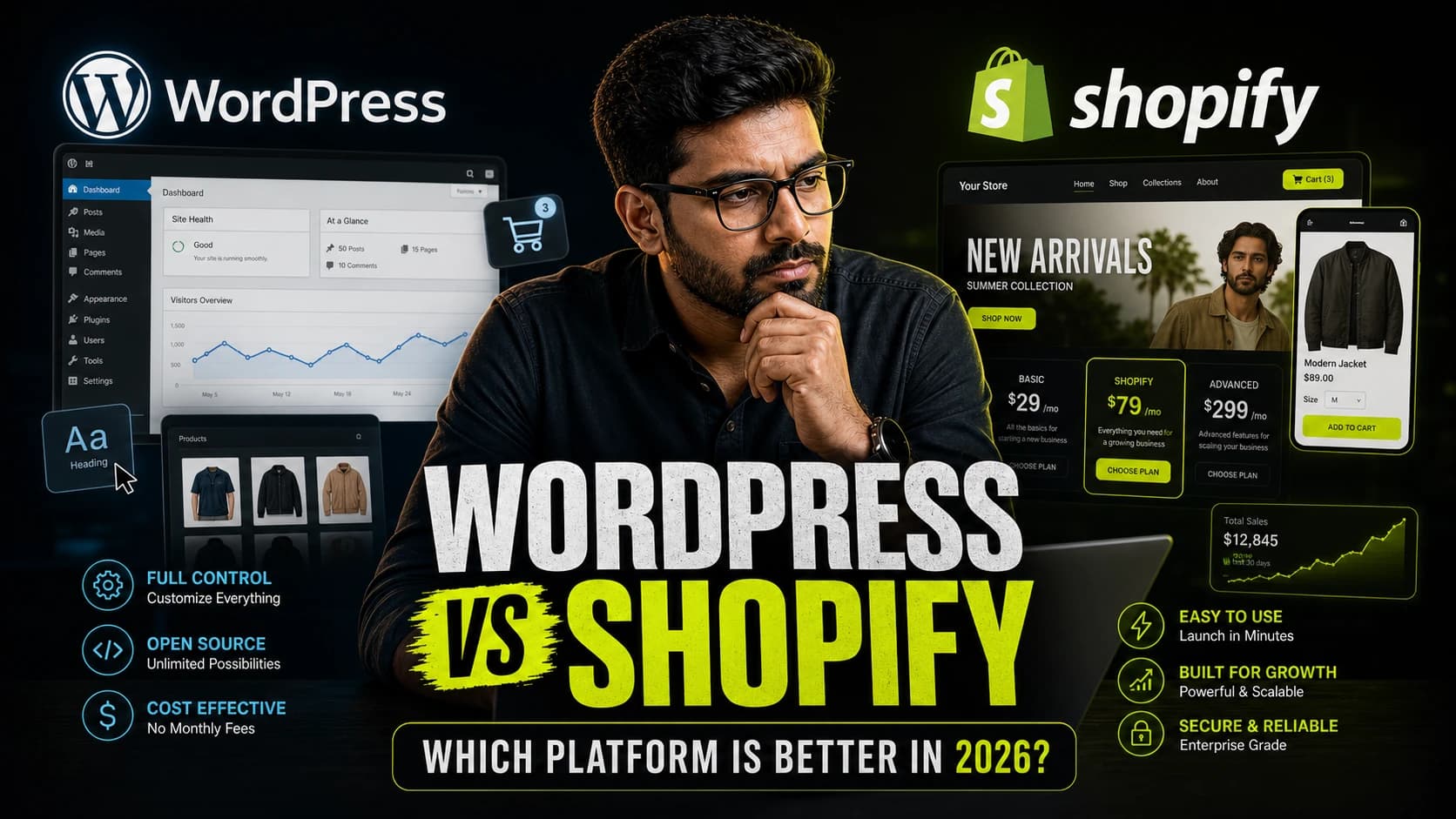
If you are deciding between WordPress and Shopify in 2026, the right answer is usually not about which platform is more famous. It is about what kind of business you are building. A content-led service brand, a fast-moving ecommerce store, and a hybrid business that sells while also publishing heavily do not need the same system. That is why the real question is not which platform is better in general, but which platform is better for the way your business actually works.
In 2026, Shopify is usually the cleaner choice for store operations, while WordPress is usually the more flexible choice for content structure, design freedom, and broader website control.
01 The shortest answer: what each platform is best at
Shopify is built first for selling. Its strength is that products, cart flow, payments, inventory, and day-to-day commerce operations feel more integrated from the beginning. If your business lives or dies by how quickly you can launch and manage a store, that simplicity matters.
WordPress is broader. It can absolutely support ecommerce, especially through WooCommerce, but its deeper strength is flexibility. You get more freedom over content architecture, page composition, brand storytelling, and how the website grows over time. If your website needs to do more than just sell products, WordPress often feels more open and more adaptable.
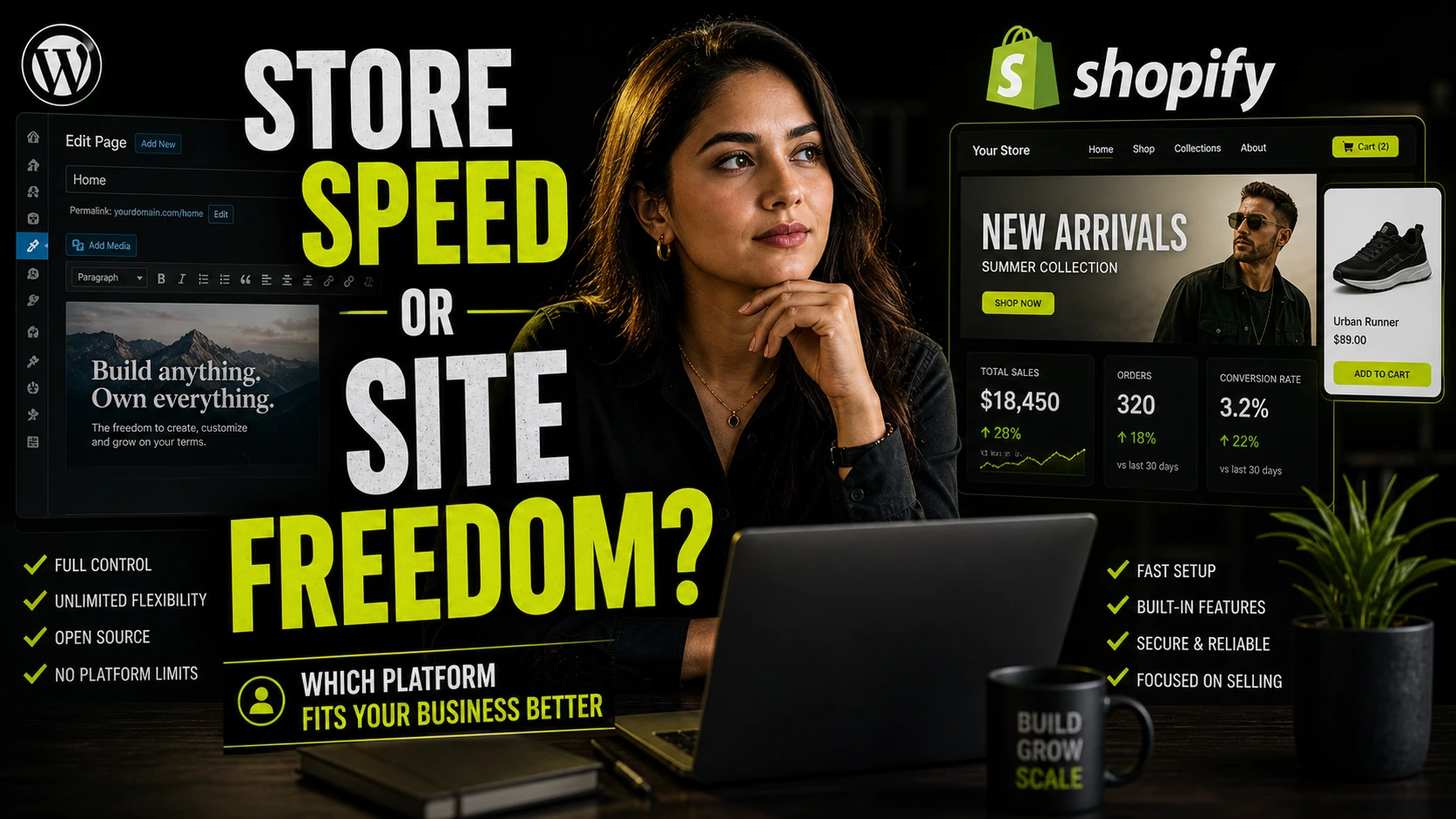
A quick practical view
- Choose Shopify if the business is primarily an online store and you want the operational path to feel cleaner.
- Choose WordPress if the website needs stronger content control, custom structure, or a more open long-term setup.
- Choose based on workflow, not hype, because both platforms can look good but behave very differently once real content and real sales pressure arrive.
02 Design freedom and brand control
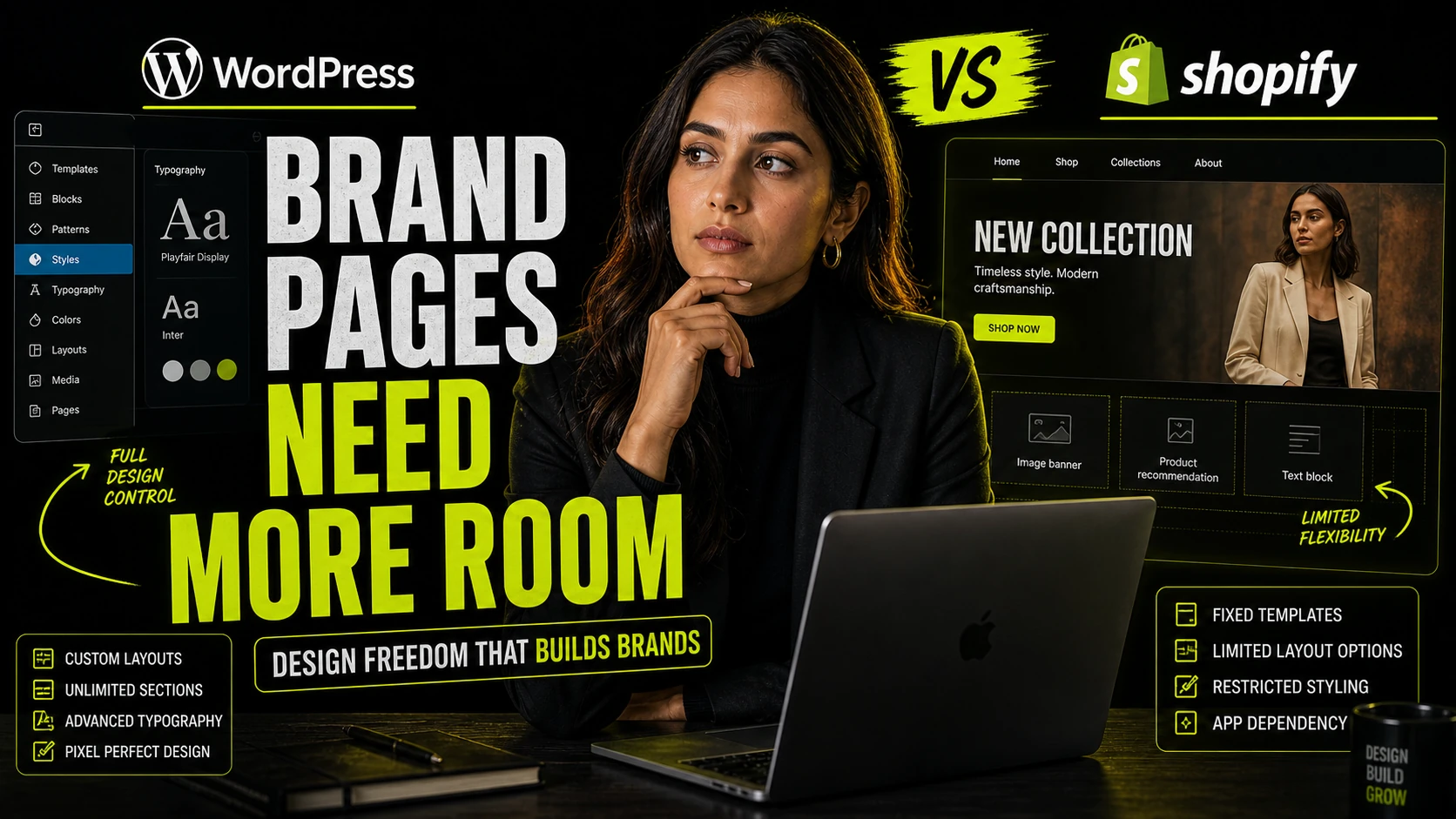
If visual control matters a lot, WordPress usually gives more room to shape the experience. You can treat the site as a full brand system rather than a store with supporting pages. This matters for consultants, clinics, manufacturers, service businesses, or premium brands where trust and narrative are just as important as transactions.
Shopify can still look excellent, but many businesses end up adapting their design choices to the platform's commerce-first patterns. That is not always a problem. In fact, it can speed things up. But if you want more freedom to shape unusual layouts, richer landing pages, or a content-heavy storytelling structure, WordPress usually gives you more breathing room. That is the same kind of difference I talk about in my article on website design cost in India, where the price often changes because deeper design freedom means deeper work.
03 Ecommerce strength: where Shopify usually wins
For pure ecommerce execution, Shopify often wins because the selling system is more tightly packaged. Product setup, variants, checkout flow, payment support, order handling, and the broader store administration experience are usually easier for non-technical teams to live inside every day.
That does not make WordPress weak. WooCommerce can be very capable. But it often asks for more decisions: theme quality, plugin choices, hosting quality, performance tuning, and ongoing maintenance. If you want less operational friction and a more guided commerce stack, Shopify has the edge. If you want more control and are comfortable managing complexity, WordPress plus WooCommerce can still be the better fit. If WooCommerce is your likely path, the WooCommerce service page is the most relevant companion read.

04 Content marketing, SEO, and publishing flexibility
If SEO and content marketing are major growth channels for your business, WordPress often becomes more attractive. It was built around publishing, structure, categories, editorial workflows, and content extensibility. That makes it easier to shape a site where service pages, articles, landing pages, lead magnets, and case studies all work together as one system.
Shopify can still support content and SEO well, especially for ecommerce brands that publish buying guides, collection pages, and product-led content. But when the business needs deeper editorial architecture, WordPress often feels more natural. This connects closely to my article on AI SEO plugins for WordPress, because platform choice and SEO workflow are usually tied together more than people expect.
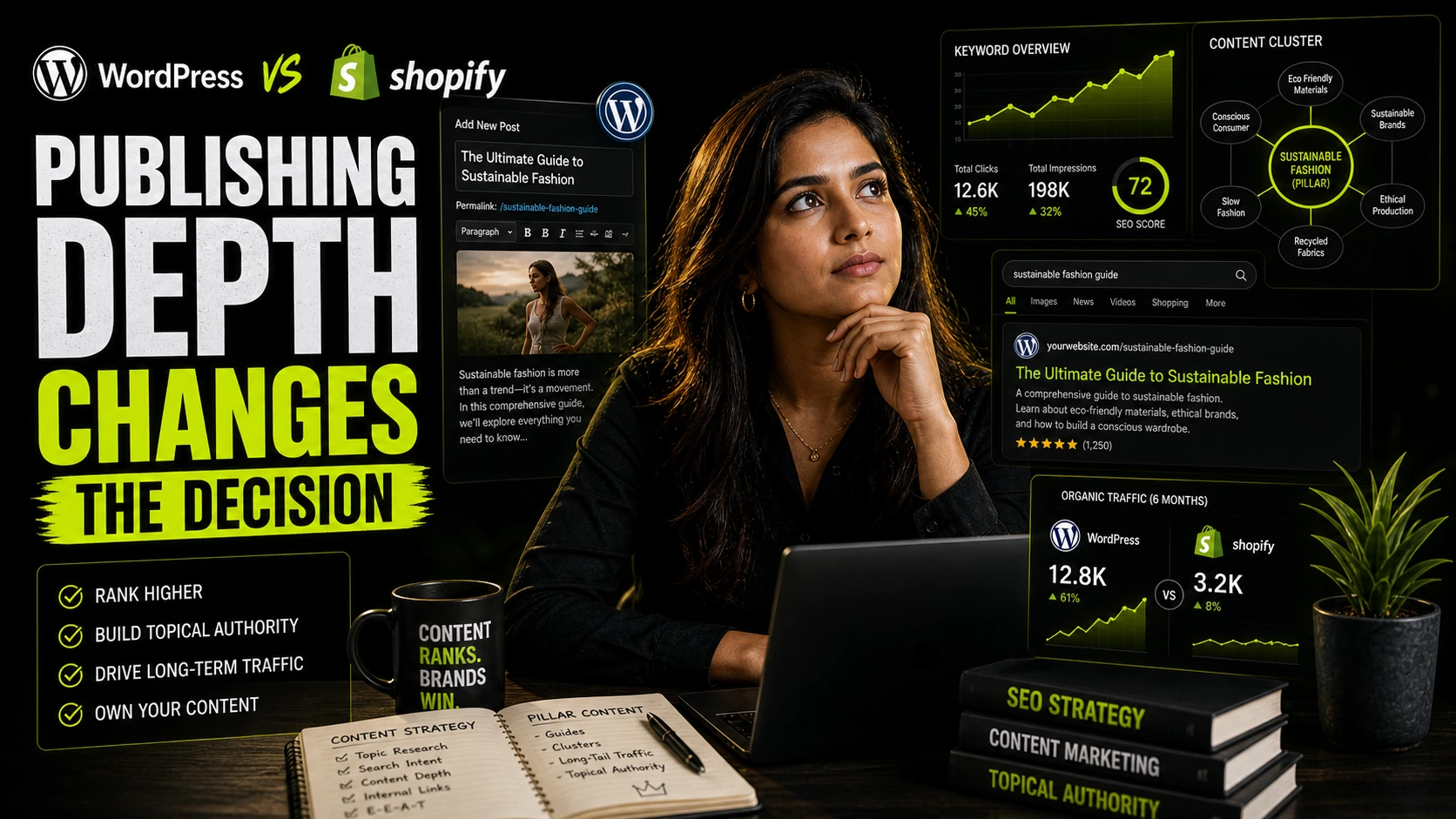
Neither platform ranks by magic. The real SEO advantage comes from content quality, structure, performance, and how well the platform supports the workflow behind those things.
05 Maintenance, ownership, and technical overhead
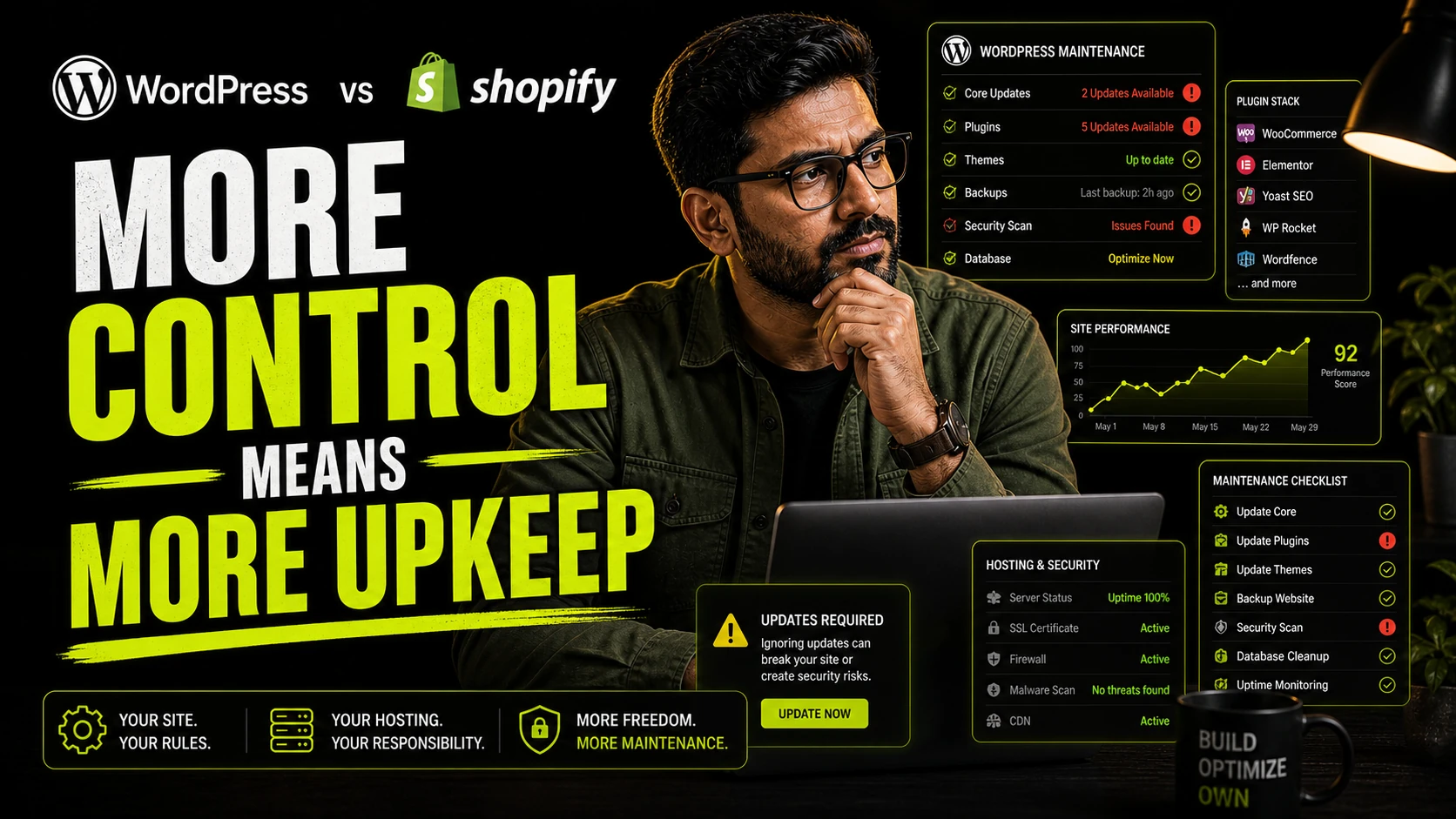
This is where many business owners feel the difference after launch. Shopify is usually easier to maintain because the platform handles more of the underlying infrastructure. That means fewer moving parts for the business owner to coordinate. For many teams, that lower cognitive load is worth a lot.
WordPress gives you more ownership and flexibility, but that freedom comes with responsibility. Hosting quality, plugin health, performance, security habits, and frontend discipline matter more. A badly managed WordPress build can become slow and messy. A well-managed one can be powerful and scalable. That is the same performance tension I describe in my articles on Core Web Vitals and real-user speed.
06 Cost in 2026: what people often misunderstand
A lot of people assume Shopify is always cheaper because it feels simpler, or that WordPress is always cheaper because it is open and familiar. In reality, the cost depends on what you are building. Shopify can save time and reduce technical overhead, which lowers some hidden costs. WordPress can save money in one area but require more attention in design, performance, plugins, or maintenance.
The more custom the experience becomes, the less useful blanket pricing assumptions are. A standard Shopify store can be quick to launch. A highly customized WordPress or WooCommerce experience can be more involved. But a content-rich business website with moderate ecommerce needs may still be healthier on WordPress. This is exactly why platform decisions and pricing discussions should be handled together, not separately.
What usually affects the real cost
- How custom the storefront or site design needs to be
- How important content marketing and SEO are to growth
- Whether the team wants low-maintenance operations or higher control
- How many apps, plugins, integrations, and custom workflows are required
- Whether the site is mainly a store, mainly a website, or a hybrid of both
07 Which platform fits which kind of business?
Shopify is usually the better fit for product-led brands, DTC stores, and businesses that want to move quickly with a clearer ecommerce operating system. It is especially strong when the website's central job is selling products efficiently.
WordPress is usually the better fit for service businesses, personal brands, publishers, education-led businesses, and hybrid companies that need serious content structure alongside sales or lead generation. It is also a strong fit when the site is expected to evolve in shape over time rather than stay close to standard store patterns. If your website is more about trust, storytelling, conversion flow, and brand clarity than catalogue depth alone, the web design service page is the closest match to that thinking.
08 My recommendation for 2026
If the business is primarily an online store and your team wants a smoother operational setup, I would usually recommend Shopify. It reduces friction in the place where many teams struggle most: running commerce consistently after launch.
If the business needs a stronger website around the store, richer content strategy, more custom structure, or a broader brand and SEO system, I would usually lean toward WordPress. In other words, Shopify is often the better store platform, while WordPress is often the better website platform. The important part is deciding which job matters more for your business right now.
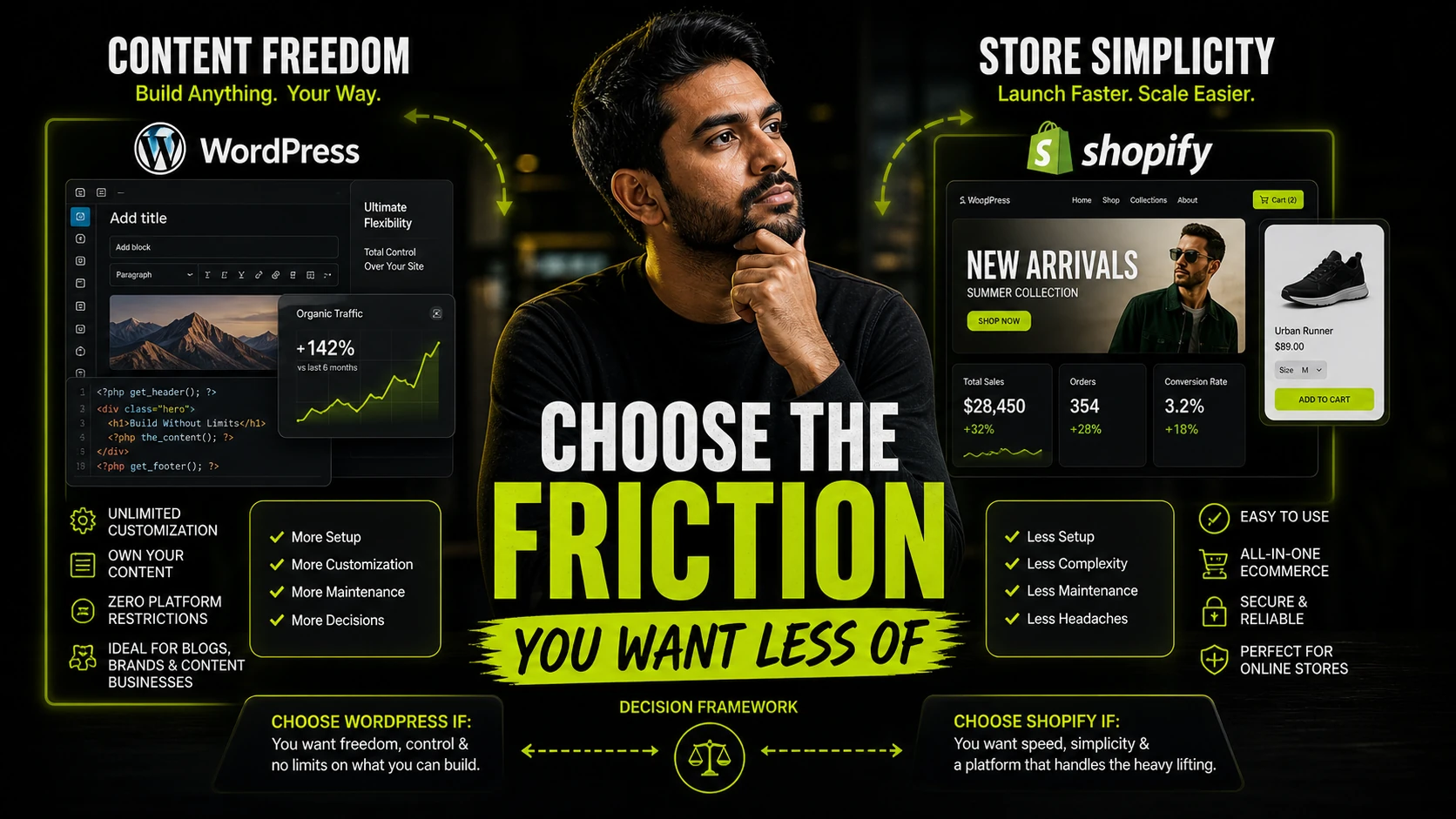
Pick the platform that reduces friction where your business feels it most
If your biggest challenge is store operations, Shopify often makes more sense. If your biggest challenge is content structure, credibility, SEO flexibility, and broader website control, WordPress often makes more sense. If you want help choosing the right direction for a business website or ecommerce build, you can explore the web design service page, the Shopify service page, or get in touch here.
FAQ
Common questions about WordPress vs Shopify: Which Platform Is Better in 2026?
A quick summary of the most common questions readers have about this topic.
WordPress is better when you need deeper content flexibility, broader customization, or a site that blends marketing, SEO, and ecommerce in a more open system. Shopify is better when you want a faster, more streamlined path to running an online store.
Shopify usually fits product-first businesses that want checkout, payments, order handling, and store operations to feel simpler from day one.
WordPress is usually the stronger fit for businesses that care heavily about content marketing, landing page flexibility, custom structure, or combining a website and store inside one highly editable environment.
Yes, in most cases Shopify is easier to maintain because hosting, core commerce infrastructure, and many operational details are handled for you. WordPress typically needs more active plugin, hosting, and performance management.
Neither wins automatically. WordPress often gives more structural freedom for content-heavy SEO strategies, while Shopify can still perform very well when the store architecture, speed, product pages, and content strategy are handled properly.