If you are searching for website design cost, website development cost, or website design price in India, the real answer is usually it depends on what kind of website you actually need. A small business brochure site, a custom WordPress build, and a full ecommerce store may all be called "a website," but they are not the same level of work. That is why prices can look confusing until you break the project down properly.
In India, the cheapest website is rarely the most affordable website long term. The better question is what level of design, development, content structure, and business support you are paying for.
01 Website design cost in India: the short answer
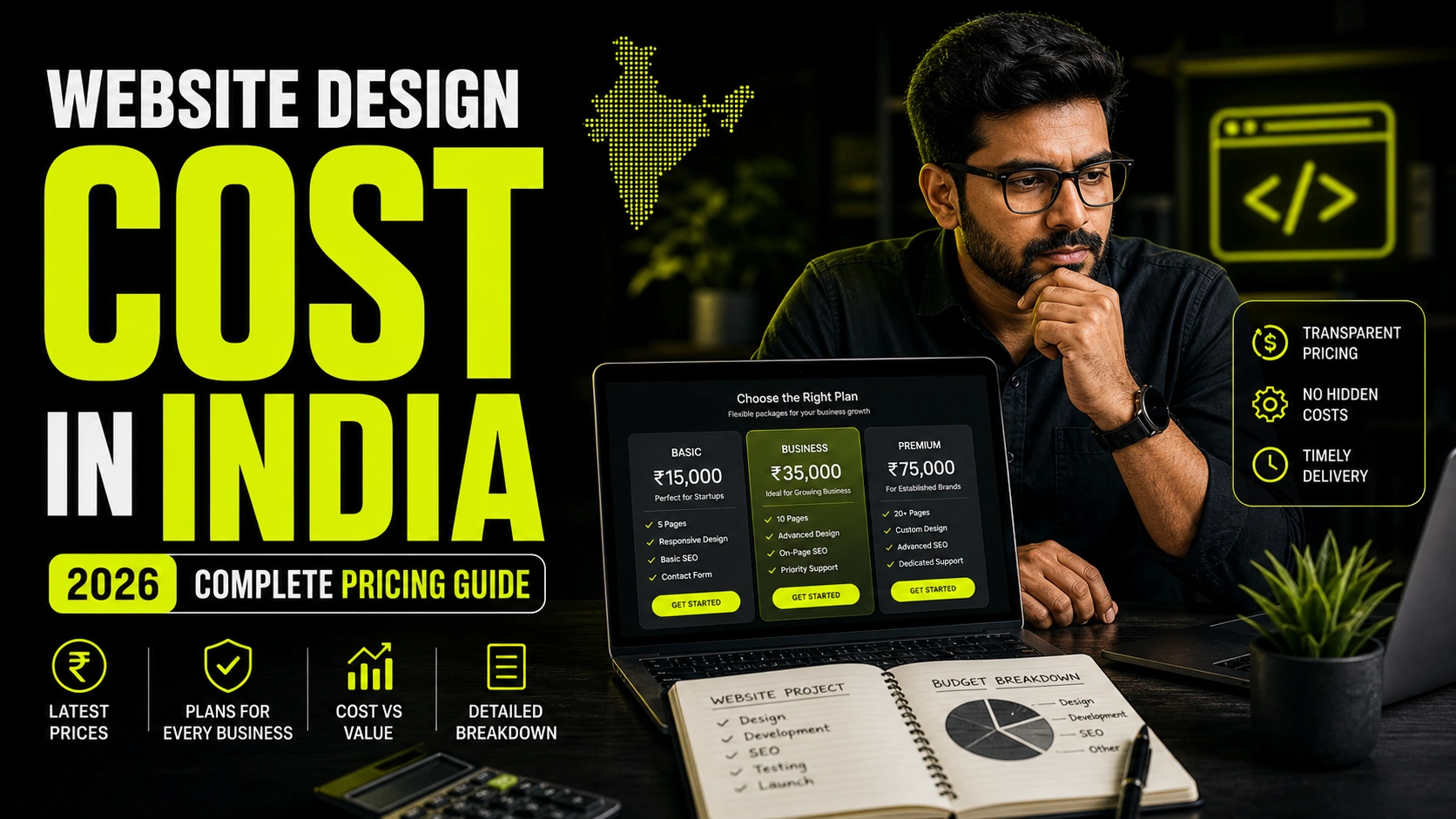
For a typical business website in India, a practical starting range is often Rs. 25,000 to Rs. 60,000 for a smaller basic site with a modest page count and standard functionality. Once the project needs stronger visual design, better messaging structure, custom layouts, CMS flexibility, animation, landing page thinking, or conversion planning, the price usually moves into the Rs. 75,000 to Rs. 2,50,000+ range.
If you are comparing quotes, this is the first thing to remember: one vendor may be pricing "just build the pages," while another may be pricing research, UX, SEO structure, responsive design, content planning, and polished implementation. Both are selling a website, but they are not selling the same outcome.
A simple pricing view
- Basic website: often around Rs. 25,000 to Rs. 60,000
- Professional business website: often around Rs. 60,000 to Rs. 1,50,000
- Custom brand-led or conversion-focused site: often around Rs. 1,50,000 to Rs. 2,50,000+
- Ecommerce website: often around Rs. 60,000 to Rs. 5,00,000+ depending on complexity
02 What actually changes the website design price?
The final website design price in India is usually shaped by scope, not by one fixed market rate. A five-page site with simple content and a familiar layout is very different from a site that needs custom page structure, service storytelling, better UX, mobile optimization, and content planning for SEO.
This is also why some websites underperform even after launch. They may be cheaper to build because important work was skipped: information architecture, homepage messaging, conversion flow, content hierarchy, or mobile performance. I talk about that gap more directly in my articles on mobile speed and real-user speed.
The biggest pricing factors
- Number of pages and unique layouts
- Custom design vs theme-based design
- WordPress, Shopify, or custom development approach
- Copy structure, SEO setup, and content entry
- Forms, booking, payment, CRM, or third-party integrations
- Performance optimization and mobile UX polish
- Revision rounds and timeline pressure
03 WordPress website cost in India
The average WordPress website cost in India often starts around Rs. 30,000 to Rs. 1,50,000+, with the lower end usually covering simpler business websites and the higher end covering custom design, custom theme work, CMS flexibility, better frontend polish, and stronger content structure.
WordPress is popular because it can scale from a small company site to a more serious publishing or lead-generation setup. But the cost can change quickly depending on whether the project uses an off-the-shelf theme, a highly customized page-builder workflow, or a more carefully designed frontend approach. If the goal is not just "have a website" but "have a website that feels credible and easier to grow," the build quality matters a lot. That is the same kind of work I describe on the web design service page.
A cheap WordPress build can become expensive later if it is bloated, hard to edit cleanly, weak on mobile, or dependent on too many plugins.
04 Ecommerce website cost in India
If you are researching ecommerce website cost, expect a wider range. A smaller online store in India may start around Rs. 60,000 to Rs. 1,50,000, but a more serious ecommerce build can easily reach Rs. 2,00,000 to Rs. 5,00,000+ once product structure, category UX, payments, shipping rules, account flows, search, filters, and post-launch growth needs become more demanding.
Ecommerce projects cost more because they are not just websites. They are buying systems. Product discovery, product pages, trust signals, checkout flow, and operational integrations all matter. If the store is built on WooCommerce, the price may also change based on theme customization, plugin stack, and how much custom storefront work is needed. If that is the path you are considering, the WooCommerce service page is the most relevant next read.
05 Website development cost vs website design cost
A lot of people use these terms interchangeably, but there is a useful difference. Website design cost usually covers the visual and UX side: structure, layout, hierarchy, responsive behavior, page composition, and overall presentation. Website development cost usually covers turning that plan into a working website with CMS setup, frontend implementation, forms, integrations, performance work, and technical QA.
In smaller projects the same freelancer or agency may combine both into one price, which is normal. The important thing is to understand whether you are being quoted for only development execution, or for actual design thinking as well. The result can feel very different even when the price difference looks small at first.
What design often includes
- Wireframing or page planning
- Visual direction and responsive layout thinking
- Homepage and service-page structure
- CTA placement and conversion flow
What development often includes
- CMS setup and page building
- Theme customization or custom frontend work
- Forms, integrations, and technical functionality
- Optimization, testing, and launch support
06 Why some agencies quote far more than freelancers
Freelancers, studios, and agencies are often pricing different delivery models. A solo designer-developer may offer a leaner price because communication is direct and overhead is low. An agency may charge more because it includes account management, multiple specialists, brand strategy, copy support, SEO input, and a more layered review process.
That does not automatically make the higher price wrong or the lower price better. The real question is whether the workflow fits the business. Many small and mid-sized businesses in India do well with a focused freelance partner. Larger, multi-stakeholder projects may benefit from a broader team. Price only makes sense when viewed against process, ownership, and the expected business outcome.
07 Hidden costs people forget to ask about
A lot of website projects look affordable in the initial quote and become messy later because the client assumed certain things were included. Domain, hosting, premium plugins, content writing, extra revisions, stock images, maintenance, landing pages, multilingual support, and SEO deliverables may all be priced separately.
This is where many website quotes become hard to compare fairly. One quote may exclude everything after launch. Another may include setup, content formatting, security basics, redirects, and training. If you want a clean comparison, ask what is included in plain language.
Always ask whether the quote includes hosting setup, plugin licenses, content upload, on-page SEO basics, contact form setup, analytics, and post-launch support.
08 How to choose the right budget for your business
If you only need a basic online presence quickly, a lower-budget website may be enough. If the website is supposed to generate leads, support sales conversations, improve brand trust, or act as a core business channel, it is usually worth investing beyond the cheapest option. A website that explains your offer clearly and feels credible can pay for itself much faster than a cheaper site that visitors do not trust.
One practical way to think about it is this: if a better website helps you win even a few higher-value enquiries, improve conversion rate, or reduce hesitation for serious buyers, the price difference starts to make sense very quickly. This is especially true for service businesses, consultants, clinics, manufacturers, and ecommerce brands where first impressions strongly affect revenue.
09 My honest recommendation
For many businesses in India, the healthiest middle ground is not the cheapest website and not the most over-engineered one either. It is a website with a clear message, custom-enough design to feel credible, responsive performance, easy content management, and a structure that supports future growth. That usually means paying for thought, not just assembly.
If you are comparing proposals, look beyond page count. Ask how the homepage will be structured, how mobile performance will be handled, how the CMS will be set up, and whether the website is being designed to convert or merely to exist. That usually tells you more about value than the raw price line.
A professional website should feel like an asset, not just an expense
The best answer to "how much does a professional website cost?" is that it should cost enough to solve the real business problem well. If you want help planning a website that feels clearer, faster, and more credible, you can explore the web design service page, review recent website projects, or get in touch here.
FAQ
Common questions about Website Design Cost in India 2026: Complete Pricing Guide
A quick summary of the most common questions readers have about this topic.
For many businesses in India, a professional website design project typically starts around Rs. 25,000 to Rs. 60,000 for a small basic site, while more custom or conversion-focused projects can move into Rs. 75,000 to Rs. 2,50,000 and beyond.
A WordPress website cost in India often falls between Rs. 30,000 and Rs. 1,50,000+ depending on page count, custom design, CMS flexibility, plugin needs, performance work, and whether content entry is included.
Ecommerce website cost in India usually starts around Rs. 60,000 to Rs. 1,50,000 for a smaller store setup and can rise to Rs. 2,00,000 to Rs. 5,00,000+ when product structure, checkout UX, integrations, custom features, or serious growth planning are involved.
Website design prices vary because some projects are light template-based builds while others include strategy, custom UI, responsive design, copy structure, SEO setup, CMS planning, integrations, and performance optimization.
No. A lower price can look attractive upfront but become expensive later if the website is slow, hard to update, poorly structured, or weak at converting visitors into enquiries or sales.